Featured

What is the Matter with Science?

There have been missed opportunities, mostly from the science community, to explain how the science process works. With its overwhelming ability to give misinformation, social media has not helped matters and has made things worse. Take AI for example.

Judging by the number of postings on social media, AI is portrayed as an evil, sentient machine out to rule the world like on the popular shows and movies ‘Westworld’ and ‘The Matrix’. What is not said is that these are works of fiction and the AI in the stories is the latest incarnation of “when man plays God his creation will rebel”. It is the story of ‘Frankenstein’ in the modern, technological world.
The media and the scientific community are mostly silent about the benefits machine intelligence has already provided. AI is a tool that can take enormous amounts of data and correlate it in a way researchers can find useful. New pharmaceuticals, biotechnology, and manufacturing processes would have taken decades to develop if it were not for machine intelligence. AI is not sentient. It can mimic human responses but is not conscious. It’s a highly effective tabulator and nothing more. But since listening to stories about “killer machines” is more interesting than learning algorithmic coding the fear of AI wins the propaganda war.

Most “science news” media give the public the wrong idea about science. For example, reality is not subjective and deterministic on a day-to-day macro-level. The apple is red because that is the wavelength the photoreceptors in our eyes registered, and our brains interpret Whether a human or any organism that can perceive the same wavelength red is red. The non-human organism may not understand the concept of “red” but knows what it means.
It’s at the subatomic quantum level where reality becomes fuzzy only because scientists don’t fully understand it. Terms like “entanglement”, “locality”, and “hidden variables” are inadequate descriptions of the mathematical theorem in quantum mechanics. Thought experiments illustrate phenomena described in math. Unfortunately, the news media takes these examples too far and falsely apply to real-world experiences. They are examples that describe math and not reality. Physicists have told how observable phenomena work and have done it well. But there is still a lot to be known. Like, how things at the subatomic scale relate to cosmic-level relativity. Scientists look at the data, create an idea explain it, and evaluate it. Sometimes they get it right. Most of the time the data makes new questions. So, back to the drawing board, pen and paper, or laptop, to figure out why. Quantum mechanics is not an exact, well, science. It is getting there, but not anytime soon (there’s that nagging problem with relativity).
Here is where the media, for reasons I can only perceive as sensationalism, gives the general public the wrong impression. Whenever a news article claims that scientists have proved, or most often disproved an established theory, you should always take it with a grain of salt. By the way, salt is chemical salt, and not a concept.

Three Rules of Human Ingenuity

Rule #1: All ideas are good ideas at the time until they are not.


1. a. All ideas are bad ideas.


1. b. Having an idea is better than not having one.


Rule #2: All good ideas will corrupt for profit.


2. a. People will pay anything for an idea.

2. b. There is no regard for Rule #1.

Rule #3. The more complex a system, the simpler the idea to explain it.

3.a. In regards to Rule #2, “a sucker is born every minute.”

3.b. There is no regard for Rule #1.

Featured

Transparency in Science

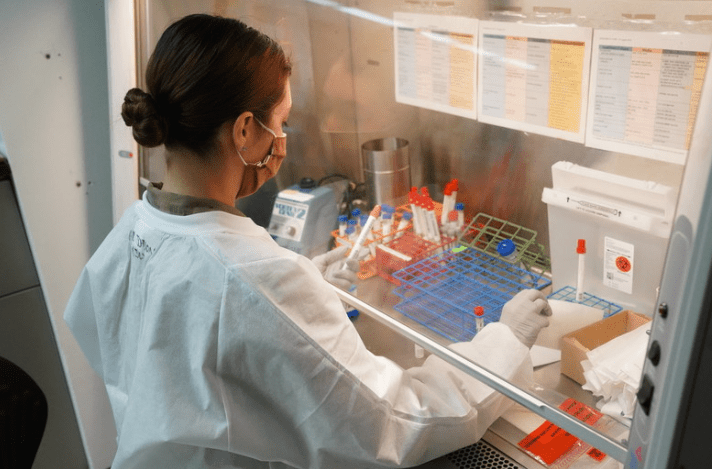
Scientific research, unlike how it’s portray on the screen, is a lot of work spending many weeks in just data collecting. After that, comes the many days compiling and evaluating the research.

I have heard a lot on social media lately about how “scientific researchers are concealing information from the general public” that the scientific community are “colluding to inflate the number of those infected with the coronavirus to embarrass the president”, or that they are just lying about the results. These people say that there is a “lack of transparency” within the scientific community and that everything they say should be doubted. All of this comes from the lack of understanding of how research studies are reviewed before its publication and why peer review is so important.

For science to work there has to be transparency but sometimes you have to wait for the results to be evaluated and peer review. The general public has a problem understanding the last two, especially peer review. When a study is first presented it must be gone over by experts before publishing. This is not, as conspiracy nuts like to suggest, to protect the “Science Oligarchy” but to catch any missed errors in the methodology, data collecting, margin of error, and conclusion. A good study is one in which the data suggest something not quite as expected. If your research supports your hypothesis too strongly, one has to doubt the legitimacy of the methodology, data collection, or conclusion. This is why evaluation and peer review are important. When millions of dollars can sometimes ride on the correct results, it can be devastating to a group if there are mistakes in their study. Sometimes, and the news media like to report on these, some research groups have faked data, or cheated in their methodology to get the results they want. They are rare (100s of thousands of studies are done yearly) because most are caught during the review process. Getting caught cheating carries a heavy penalty. Not only do you lose your job, your reputation as a researcher and options for future work in the science field is permanently damaged.

Here are several recent Sars-Cov-2 vaccine studies. all you have to do is find where to look and read them. Oh, and most news media reporters do not have the time nor the technical know-how to figure out what these studies mean. These are the two leading vaccine studies most heard on the news lately. if you follow me you’d know I share the stuff.

For the Oxford-AstraZeneca study, https://www.thelancet.com/journals/lancet/article/PIIS0140-6736(20)31604-4/fulltext#seccestitle80

For the NIAID-Moderna study, https://www.nejm.org/doi/full/10.1056/NEJMoa2022483

-A. M. Holmes