Sounds like a silly thing an adult to write about. You would imagine that this sort of a subject belongs in some sixth grade English class. But after reading some of the comments in writing groups on social media I find a lot of people don’t have a clue why they want to write. Some said it is because they can’t find a story interesting enough so they think they can come up with one of their own that is better. Others think it is an easy way to fame and fortune and good marketing. And then, there are the ones who think, “Well, gosh, I have a really good story and people will think so too”.
I have to admit I fall into that last group. But, even though I’m a realist, I still believe people will enjoy what I create. Why?
Because storytelling is part of what makes us human beings. It’s in our nature and has been part of us since the time we gathered around the fire back in our hunter-gatherer days. Some of us like it and get better at it than others. For example, I see a pile of snow after a snowplow had come through and I imagine mountains and a valley and the people who live there. I see a forest and imagine what forest would be like on other worlds, what creatures live within it, who would visit it and why? I see the advancements in science and I imagine not a dystopian, post-apocalyptic world but one open to numerous, promising possibilities. Most of all, I see a good story and I imagine what it would be like to share it with an interested audience.
That is why I want to be a writer, to find my audience, to tell stories, and if on the way I become wealthy and famous, well…
All 9 of the “Skywalker” saga not including the side “Star Wars” story movies.
I love all sci-fi from books to movies to tv series so there are times like these where I can step back and watch what makes a “true fan” of a particular franchise.
As an observer, I find that ‘Star Wars’ fans fall into 4 categories that have a similarity to religious divisions. They are as follows,
1. Those that love the original 3 (as shown in the theater) movies and read the books as canon. They don’t like the later movies (especially the ‘Phantom Menace’ and ‘The Last Jedi’) and had a stroke when “The Mouse” took over.
2. Those that love all 6 movies from Lucas (including the digitally remastered), read the books as canon. They feel a little weird about ‘The Phantom Menace’ and hate ‘The Last Jedi’. They feel apprehensive about “The Mouse”.
3. Those that love all 9 movies plus the side stories (‘Rogue Squadron’ ‘Solo’), love ‘The Mandalorian’, have never read any of the books, feel J. J. Abrams has done okay, and are open to see what “The Mouse” does as long as they don’t ruin it (whatever that means).
4. And those that love all things ‘Star Wars’ -the movies, the t.v.shows, the games, the merch, EVERYTHING. They have even gone to Disney World to see Star Wars: Galaxy’s Edge.
Of course, there are those that overlap and just like religious fanatics, the most conservative of zealots are the most vocal.
And don’t get me started on the ‘Star Trek’ fans and their Paramount/Bad Robot/CBS divisions.
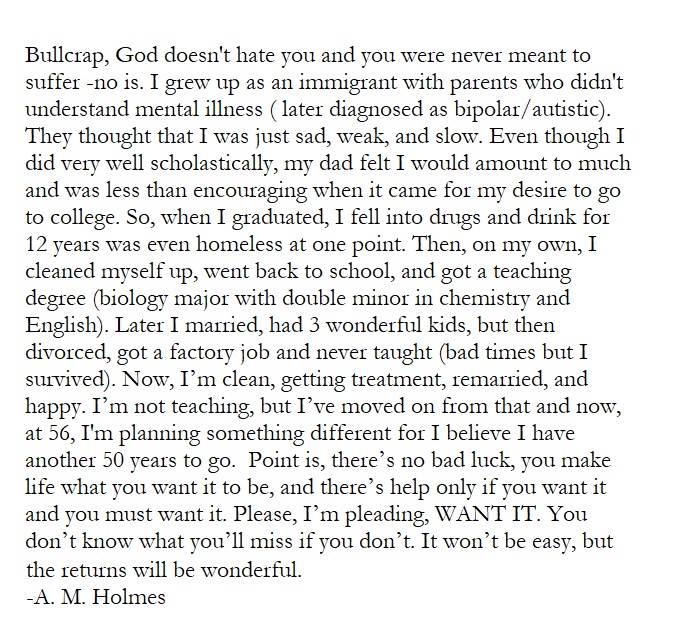
Someone on Twitter posted that “God hated” them and that she was “meant to suffer”. My reply ended up to be too long for a regular post so I “jpeged” it. Here it is, what do you think?
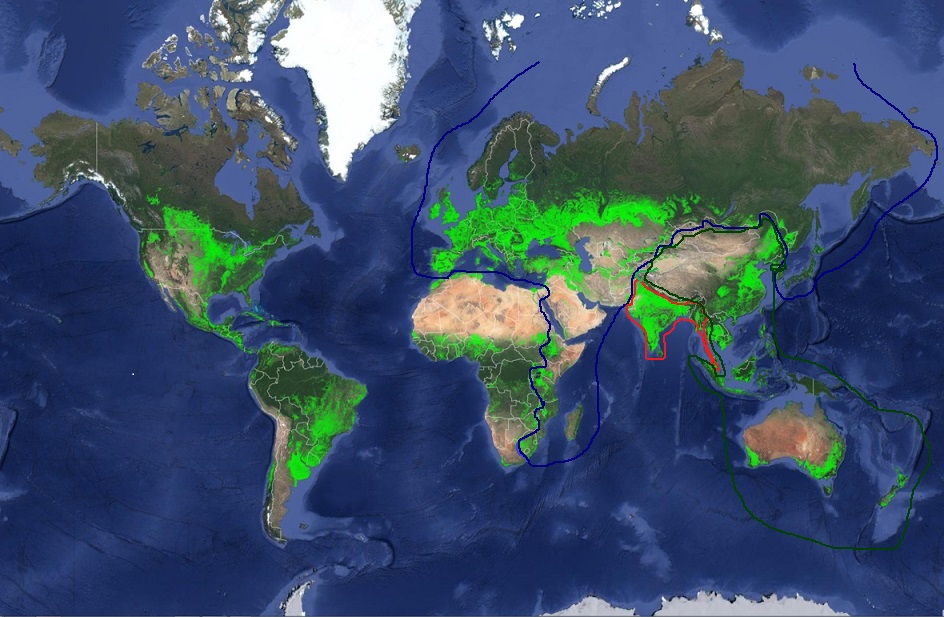
Superimposing the two I was startled by the differing distributions and what it implies. Most agricultural lands are existing in two narrow bands that cross the globe in both north and south temperate regions. When you consider population distributions you see that two of the largest agricultural regions exist in the least dense regions, the Americas and Europe. In the densest, only India has enough farmland to supply its population. But it may not be enough as its population increases.
World Population Divided Into 4 Regions Superimposed On Where All Agricultural Regions Are Located.
When one considers how this will affect the world socially, politically
and economically one only sees an increase in conflict, instability, and war.
Just a thought.
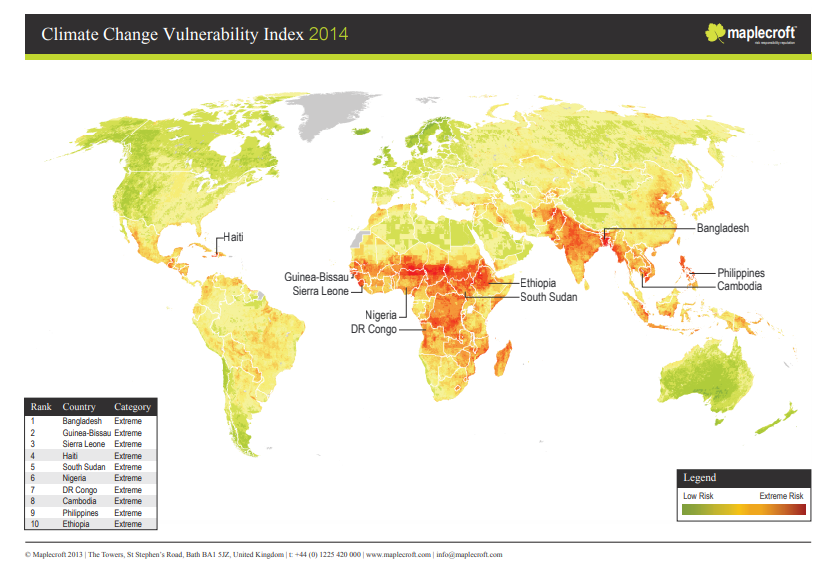
Here’s one more, all of the above doesn’t even give a consideration of how climate change will change the agricultural regions.





 Life On a Small Blue World©